STRATEGIC COMMUNICATIONS CASE STUDY
BUILDING AN INSTITUTIONAL COMMUNICATIONS CAPABILITY
How I designed the strategy, narrative and operating systems for a complex academic health enterprise
From 2023 through 2026, I built the strategic communications capability Academic Affairs needed to connect research, health professions education, public health and emergency preparedness. I authored three interconnected communications plans and translated them into institutional narratives, governance, standard work, campaigns, publications, channels and measurement systems.
3 INTERCONNECTED PLANS | 4 PORTFOLIOS | LEAN GOLD + PROSCI | MULTICHANNEL EXECUTION
-
Denver Health’s academic mission spans research, health professions education, public health, clinical care and emergency preparedness. The work crossed offices, clinical departments, locations, grant-funded programs and external partnerships, each with distinct audiences and communications needs.
When I joined Denver Health, that complexity was not supported by a dedicated academic communications function. The Office of Research published approximately 500 papers annually but had only a minimally followed LinkedIn channel and no coordinated dissemination strategy. The Office of Education lacked a centralized narrative explaining its impact across the health care workforce. The Public Health Institute at Denver Health was establishing a new identity but lacked the ownership and operating structure required to implement a unified strategy. The federally funded disaster-preparedness team had communications requirements but no cohesive way to explain its regional and national impact.
The challenge was both narrative and operational: explain what Denver Health’s academic enterprise did, demonstrate why it mattered and build the systems required to communicate it consistently.
-
I authored three interconnected strategic communications plans grounded in organizational priorities, audience needs, desired actions, channel strategy, governance and measurement.
The Office of Research and Learning Health System plan positioned research as an essential component of Denver Health’s mission. It connected evidence generation, dissemination and implementation to patient care while supporting visibility, recruitment and research culture.
The PHIDH plan addressed the institute’s identity as a public health organization embedded within a safety-net health care delivery system. I developed positioning, audience-specific messaging and executive elevator pitches organized around direct clinical care, community engagement, research and innovation, workforce development and systems change.
The Academic Affairs plan created the umbrella narrative connecting research and education to care delivery:
Research generates evidence. Education builds the workforce. A Learning Health System connects evidence to practice. Together, these functions improve patient care.
The three plans created a shared institutional narrative while addressing the distinct needs and maturity of each office.
-
Drawing on my Lean Gold training and Prosci change-management practice, I treated communications as an operating system: defining demand, standard work, roles, decision rights, performance measures and feedback loops.
I created frameworks for centralized intake, editorial prioritization, audience segmentation, content selection, review and approval, cross-channel coordination, leadership alignment and measurement. I also wrote and shared standard work for collaboration with enterprise Marketing and Communications, replacing informal requests and unclear handoffs with defined responsibilities, review paths and publishing expectations.
At PHIDH, my assessment found that performance was being constrained by structural conditions rather than a lack of expertise or content. No role owned communications operations, participation by programs was optional and no one maintained a consistent editorial workflow.
I recommended an operating model that combined strategic leadership, technical partnership with enterprise Marketing and Communications, dedicated communications capacity and clear participation expectations. Strategy could establish direction, but sustained implementation required ownership, capacity and accountability.
-
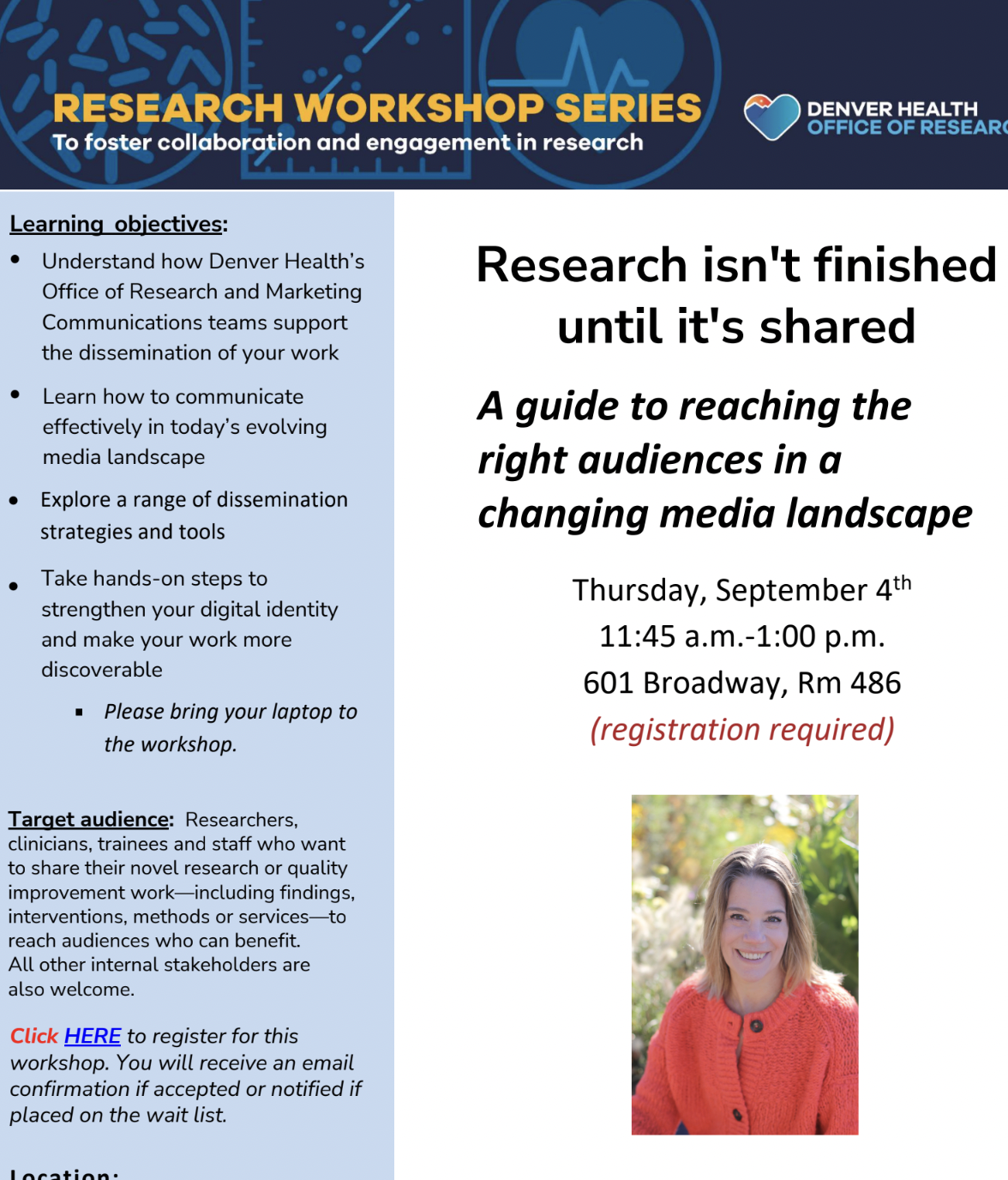
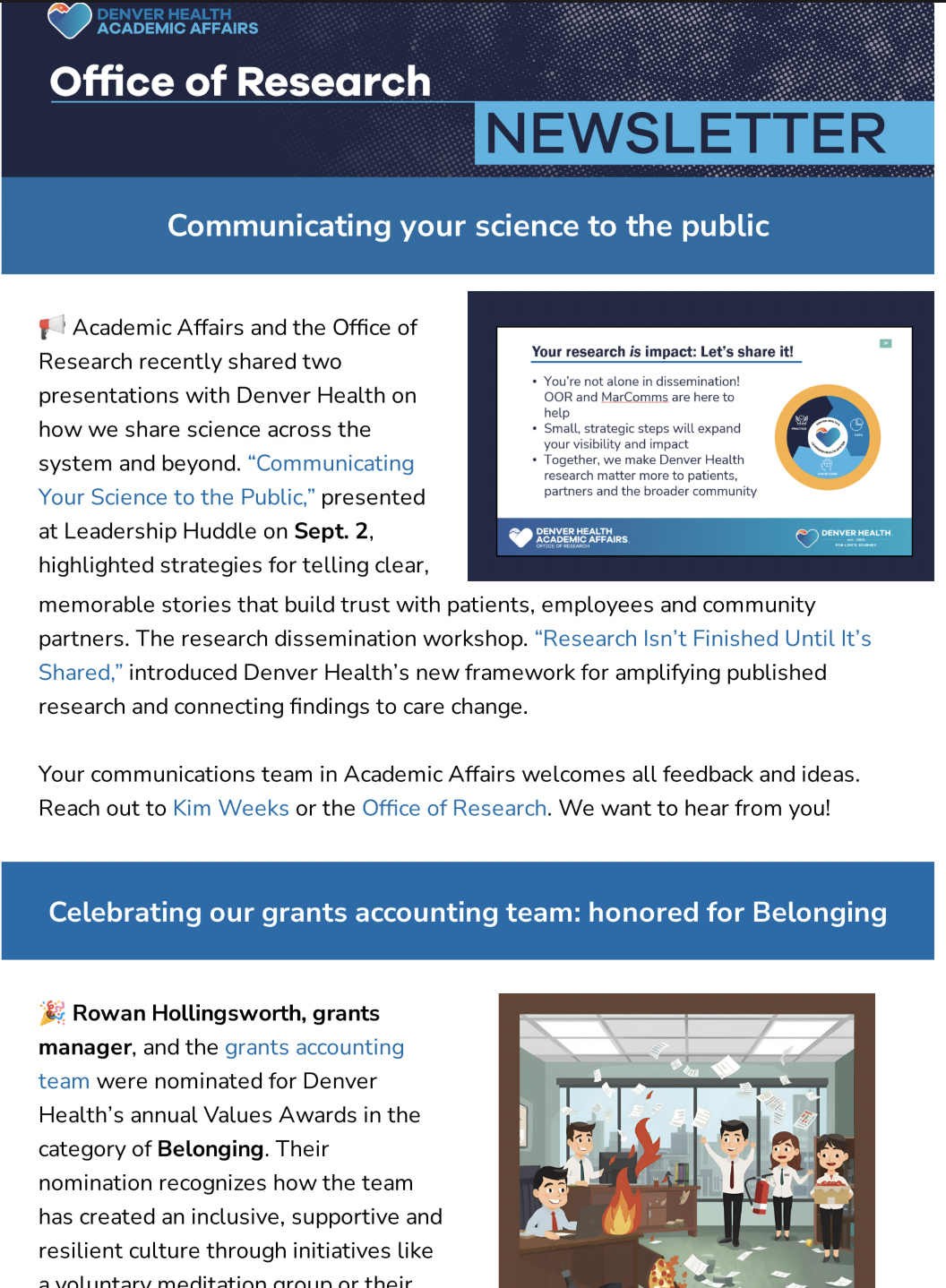
I established the Office of Research internal newsletter and built a dependable monthly publishing cadence. I also managed external communications across research and regional emergency-preparedness channels while extending priority stories through Denver Health’s enterprise platforms.
The resulting ecosystem included Office of Research and MPRDHRS social channels, internal newsletters, leadership updates, Denver Health’s primary social platforms, enterprise publications, SharePoint, websites, YouTube, media outreach and institutional campaigns. I distinguished among channels I owned directly, channels operated with partners and enterprise platforms used for amplification.
I also conceived and executed multichannel campaigns across business lines and partner brands. For Family Connects, I helped develop a family of co-branded Denver Health and Family Connects materials across audiences, formats and languages. Other campaigns supported research dissemination, workforce recognition, public health, emergency preparedness, health equity, institutional celebrations and academic recruitment.
-
I led narrative development for major Academic Affairs publications, presentations and executive materials.
For the 2025 Office of Research and Office of Education annual reports, I gathered and reconciled information across complex departments, identified the institutional story within operational data and translated varied accomplishments into coherent executive narratives. Each long-form report also became an at-a-glance leave-behind for broader audiences.
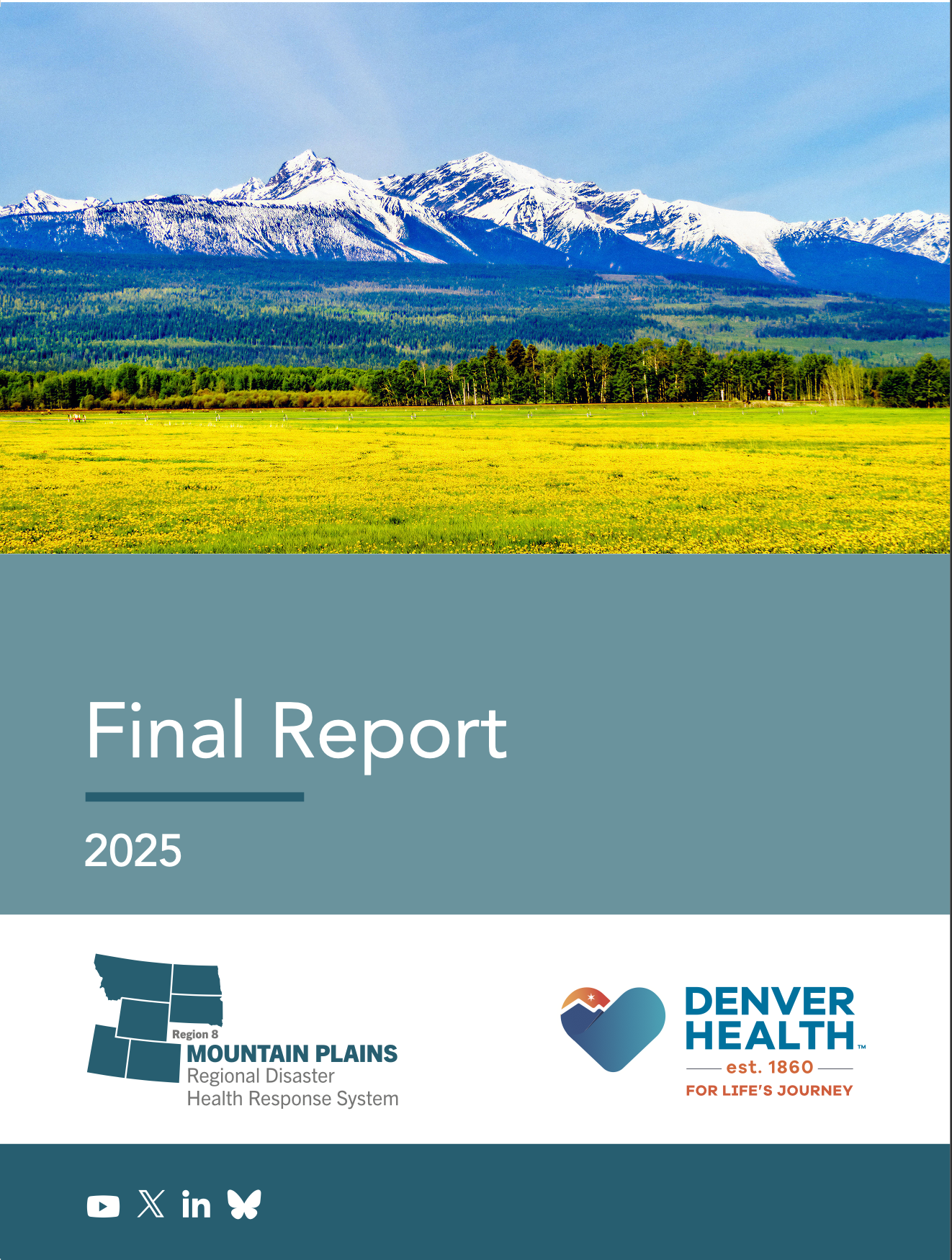
I served as principal strategist, writer and editorial producer for the co-branded MPRDHRS Year 5 Final Report. The publication combined program performance, training data, technical assistance, partnerships, photographs, testimonials, maps and data visualization into an accessible account of regional impact.
Across these projects, my role was not simply to compile information. It was to determine what the information meant, connect it to institutional priorities and make it useful to leaders, employees, partners and external audiences.
-
I measured communications at three levels: delivery, operational performance and audience response.
First, I established concrete output commitments, including two research spotlights in Denver Health’s monthly 411 employee publication, monthly collaboration with Denver Health’s primary social channels and reliable publishing cadences across the channels I owned.
Second, I assessed whether the operating system itself was functioning: whether content moved through intake, prioritization, review, approval and publishing according to the standard work I created.
Finally, I measured audience response using the evidence appropriate to each channel. LinkedIn was assessed primarily through quantitative measures such as audience growth, reach, impressions, engagement and content performance. Newsletters, websites and campaigns were evaluated using their available platform analytics.
For Leadership Huddle presentations and other internal communications, I assessed response qualitatively through questions, feedback, follow-up requests, participation and evidence that leaders and employees understood, adopted or carried the message into other settings.
Together, these measures showed whether the work was being delivered consistently, whether the system was functioning and whether communications were creating understanding, engagement or action.
-
I served as the strategic communications lead across Denver Health Academic Affairs, supporting the Office of Research, Office of Education, PHIDH and MPRDHRS.
My responsibilities included organizational assessment, strategic communications planning, institutional positioning, audience segmentation, messaging architecture, governance and operating-model design, editorial strategy, executive communications, campaign development, annual-report production, cross-brand coordination and quantitative and qualitative performance measurement.
I also remained the hands-on writer, designer, video producer, editor and publisher required to translate those systems into visible work.
The scope required me to operate simultaneously as a strategist, advisor, system designer and producer. I moved between institutional strategy and daily execution while maintaining a consistent narrative across distinct organizations, audiences, leaders, partners and channels.